
Future Frontend Trends from Evan You's Talk on a Unified Vite-Centric Frontend Framework
/ 4 min read /
Table of Contents 目录

Vite History
Check the slides!
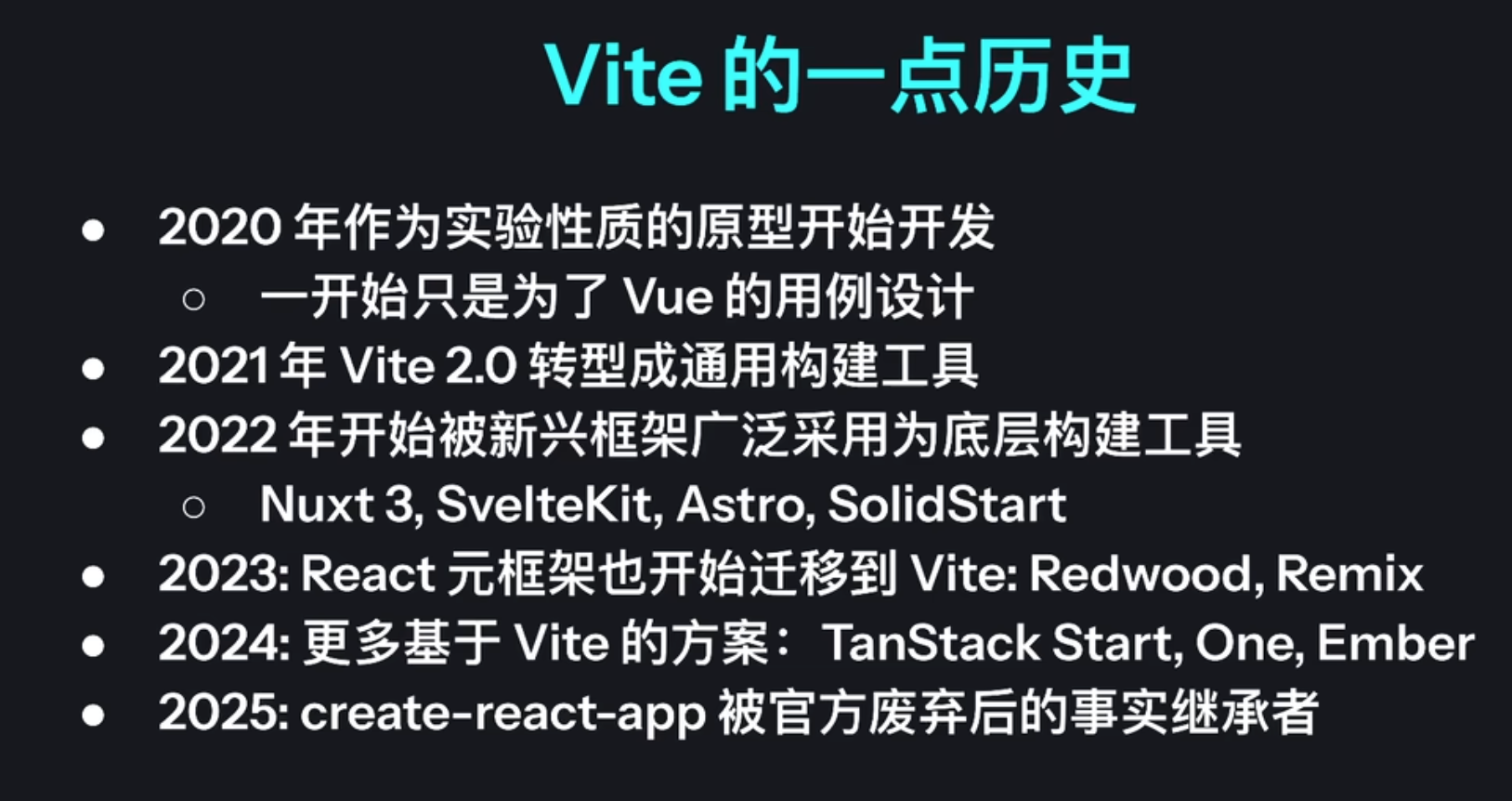
Summary: Vite is undeniably the top choice for frontend build tools today.
Vite Current Status
- 22M+ weekly downloads, surpassed Next.js in 2023.
- State of JS 2024: Vite and Vitest are the most loved and popular tools.
Vite Ecosystem
Among meta-frameworks, almost all except Next.js use Vite — well, Next.js has its own Turbopack now. Haha.
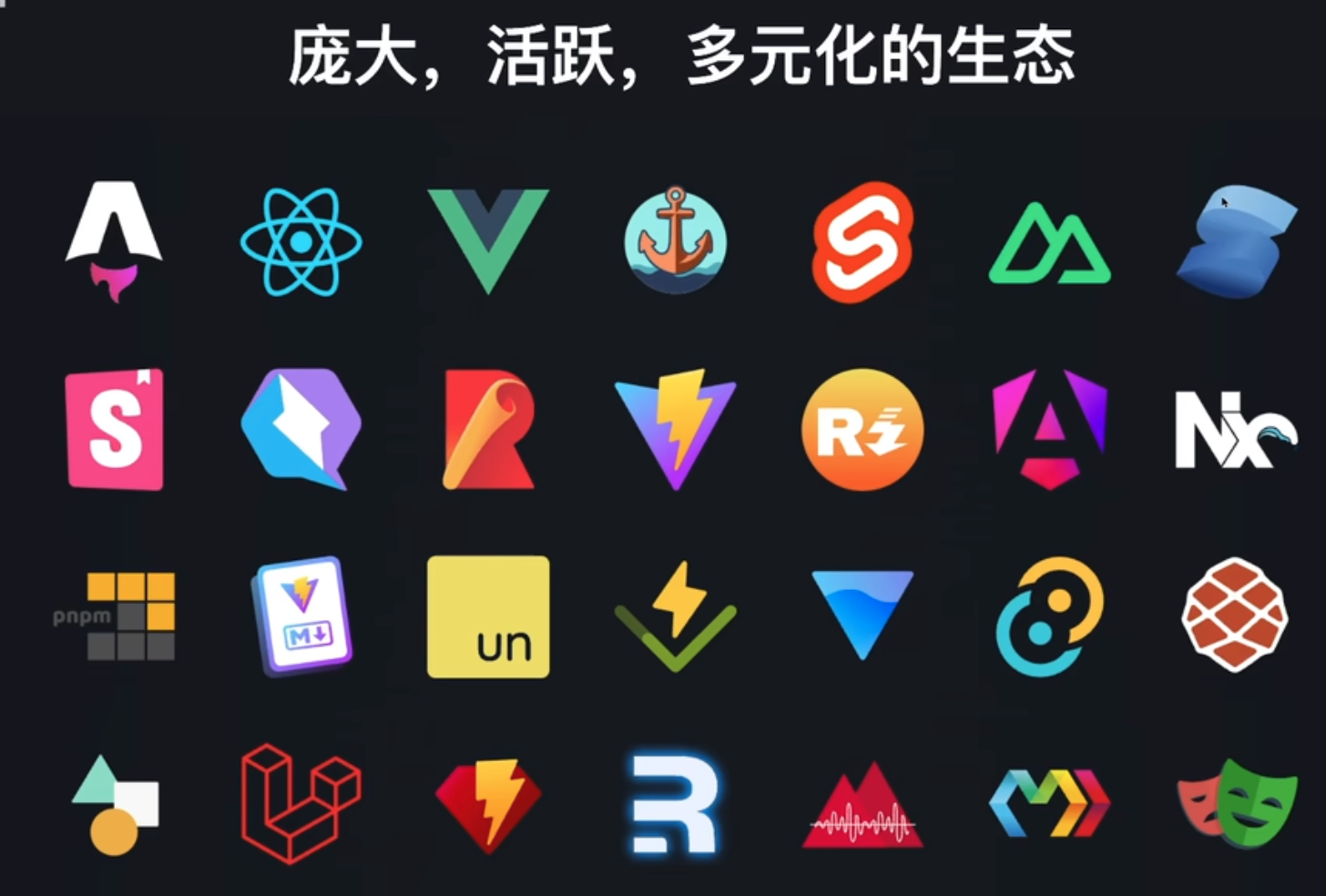
Let’s take a look at what these are!
First row
- Astro: A modern static site generator known for its Islands Architecture, building fast websites by loading only necessary JavaScript.
- React: A JavaScript library for building user interfaces, developed by Facebook, known for its component-based architecture and virtual DOM.
- Vue.js: A progressive JavaScript framework for building user interfaces and single-page applications.
- GitHub: https://github.com/vuejs/
- oxc: A high-performance JavaScript/TypeScript linter.
- Svelte: A different approach to building web apps — it’s a compiler that converts your application code into efficient JavaScript at build time, rather than interpreting it at runtime.
- Nuxt: A full-stack web framework based on Vue.js.
- GitHub: https://github.com/nuxt/nuxt
- solidjs: A declarative, efficient, and flexible JavaScript library for building user interfaces.
- GitHub: https://github.com/solidjs/solid
Second row
-
storybook: A tool for building, documenting, and testing UI components in isolation.
-
qwik: Instantly load web applications with no effort.
- GitHub: https://github.com/QwikDev/qwik
-
Rollup: A JavaScript module bundler that compiles small pieces of code into something larger and more complex, like a library or application. Vite uses native ESM in development but still relies on Rollup for production bundling and optimization.
- GitHub: https://github.com/rollup/rollup
-
Vite: Modern frontend build tool.
- GitHub: https://github.com/vitejs/vite
-
rolldown: A fast JavaScript bundler written in Rust.
-
Angular: An open-source TypeScript-based web application framework led by the Angular team at Google and the community.
-
Nx: An intelligent, scalable build system, especially suited for monorepo projects.
- GitHub: https://github.com/nrwl/nx
Third row
-
pnpm: A fast, disk-space-efficient package manager similar to npm or Yarn, but with a different dependency management strategy.
- GitHub: https://github.com/pnpm/pnpm
-
VitePress: A static site generator built on Vite, created by the Vue.js team, particularly suited for documentation sites.
-
unocss: An instant, on-demand atomic CSS engine.
- GitHub: https://github.com/unocss/unocss
-
Vitest: A blazing-fast unit test framework powered by Vite.
-
volar: A framework for building programming language tools.
-
tauri: Build lightweight, secure, and high-performance cross-platform desktop applications using Rust.
-
redwood: A full-stack JavaScript/TypeScript web application framework designed to help developers build modern web apps in a more integrated and seamless way.
Fourth row
-
Couldn’t find this one — anyone know what it is?
-
Laravel: A popular PHP web application framework. Though primarily used for the backend, it can integrate with Vite to handle frontend assets.
-
Vite Ruby: Vite integration for Ruby.
-
Remix: A full-stack web framework focused on web standards and modern web UX, building better websites.
-
Analog (formerly Peaks): A full-stack meta-framework for Angular, powered by Vite and Nitro.
-
Marko (formerly Million): A declarative, HTML-based language that makes building web apps fun.
-
playwright: A web testing and automation library.
Vite’s terrifying dominance!
Companies Using Vite
Vite’s Disadvantages
Relies on multiple third-party libraries with overlapping responsibilities.
- esbuild: Pre-bundling, TS/JSX transpilation, minification (Go)
- Rollup: Plugin ecosystem, production builds, chunking/output optimization (TS)
- SWC: React HMR, transpilation, minification (Rust)
Each handles a piece, but they have their own shortcomings, and their functionality overlaps.
Unbundled ESM has performance bottlenecks when dealing with a large number of requests.
What is Unbundled ESM? Unbundled ESM (unpackaged ECMAScript modules) is a development and deployment approach that uses native ES modules directly without merging them into a single file (i.e., without bundling).
Rolldown
Problems it aims to solve:
- Compatible with Rollup’s plugin API and ecosystem.
- Use Rust to improve production build performance.
- Add higher-level features.
- Full bundle mode to address Vite’s unbundled ESM performance bottleneck.
Here’s the JS toolchain ecosystem, organized by Evan You:
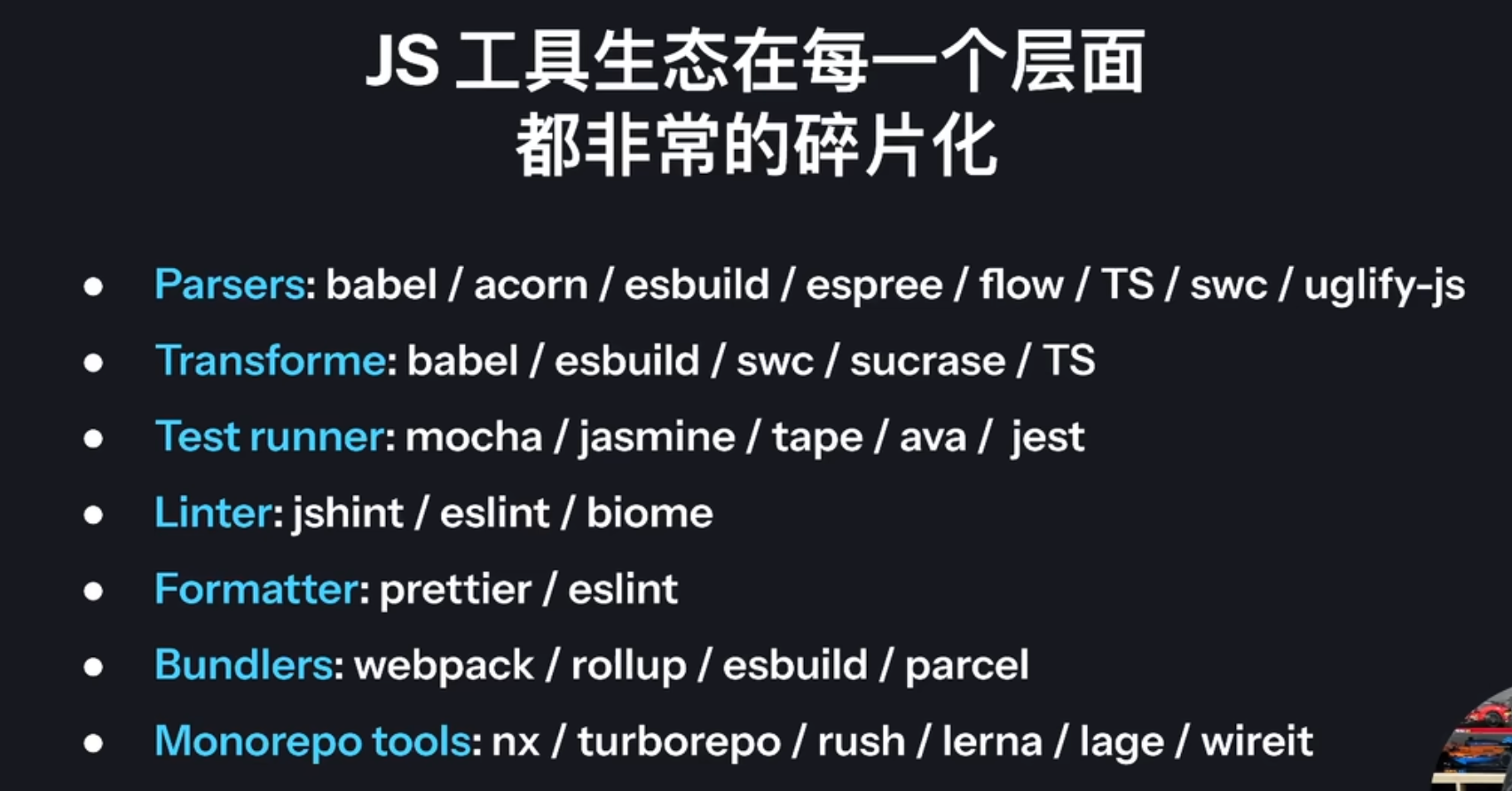
Headaches when building large frontend projects:
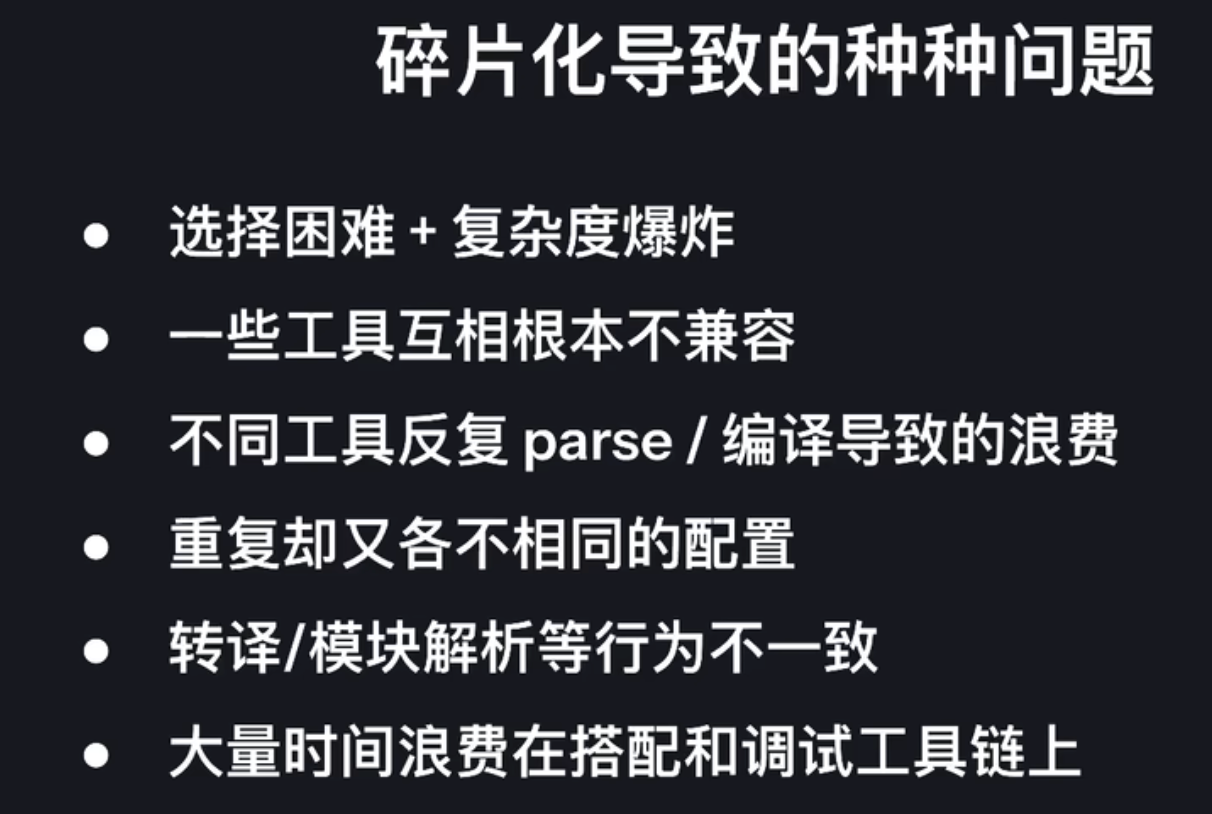
Rust for JS
Evan You’s company website: https://voidzero.dev/
Goal: Build a complete, high-performance JS toolchain.
Why Rust?
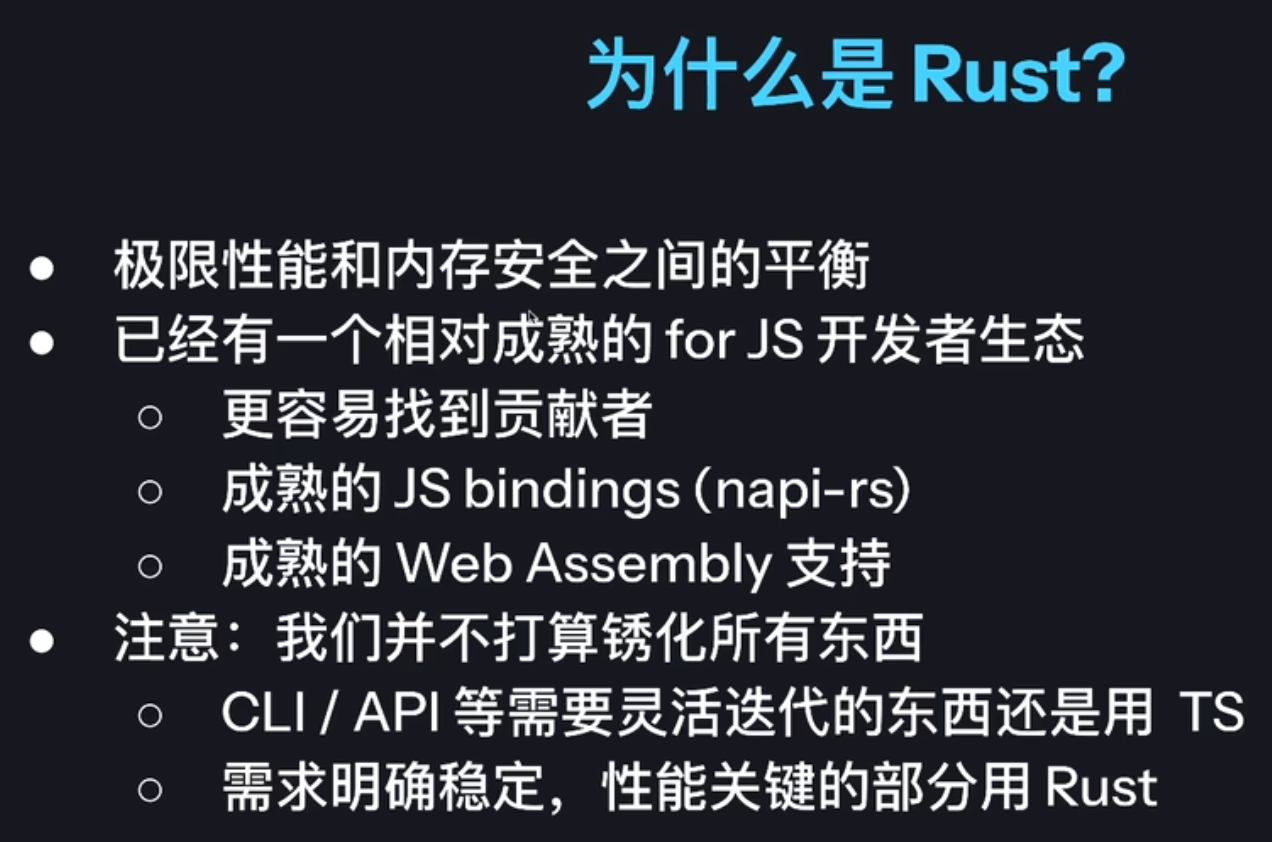
OXC delivers extreme performance across the board.
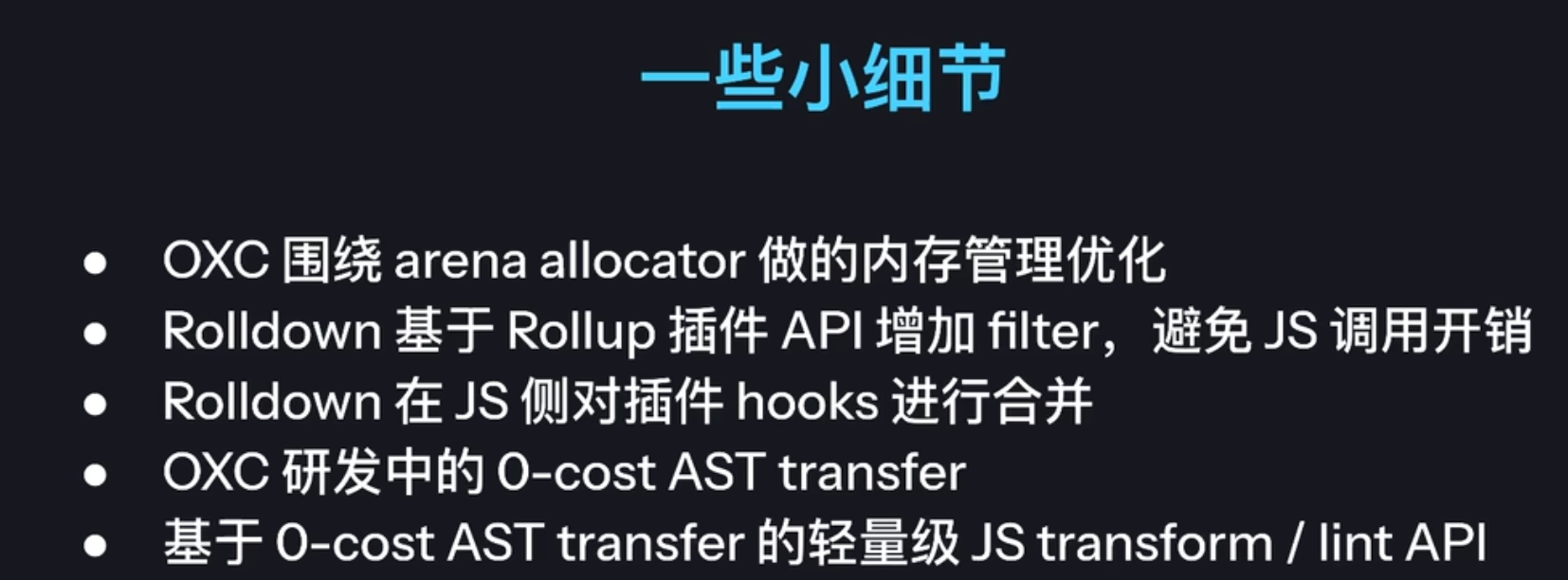
What’s being worked on now:
- Vite integration (currently not passing Astro tests).
- Vite full bundle mode, HMR, and incremental bundling builds.
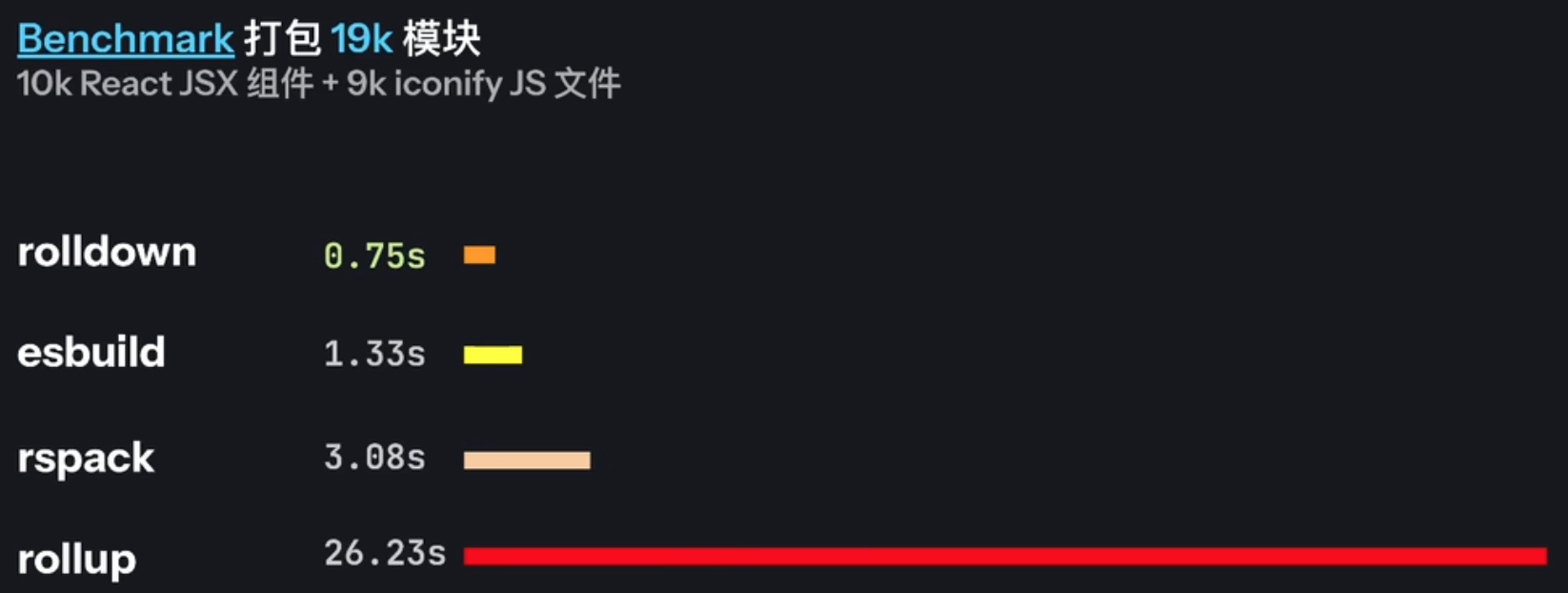
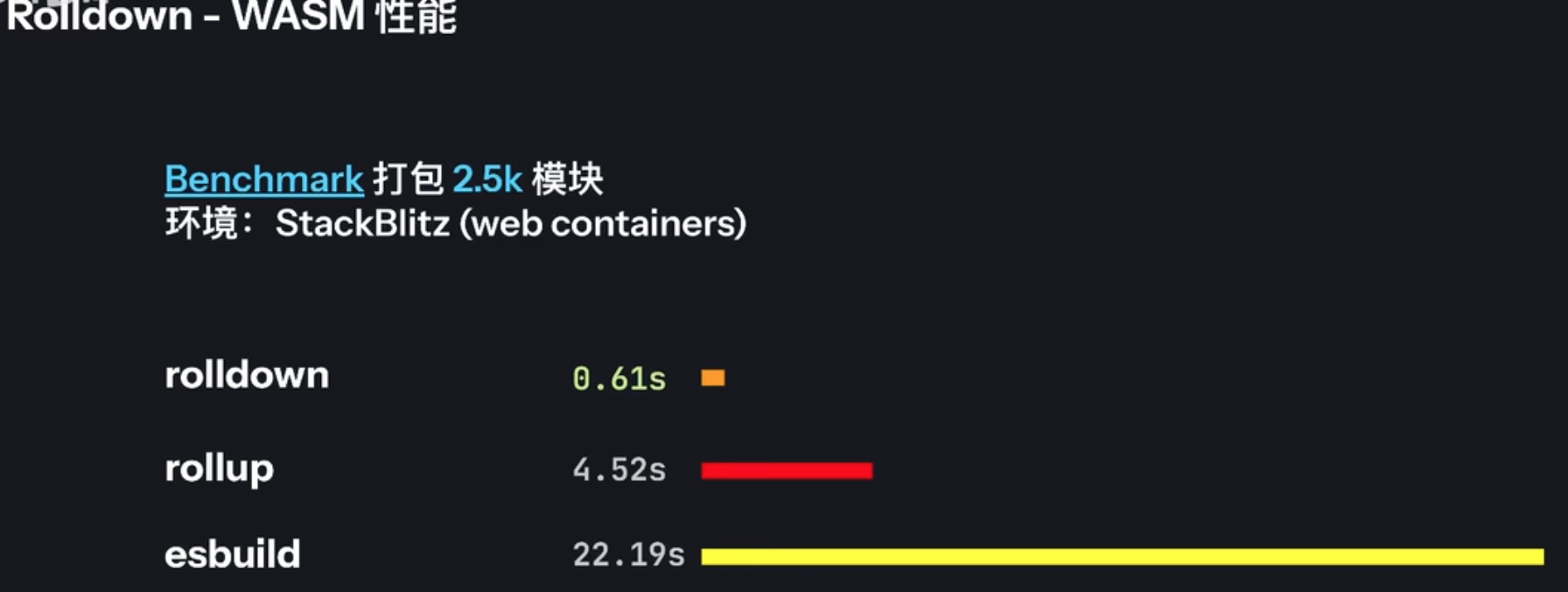
Rolldown stats:
Couldn’t catch that:
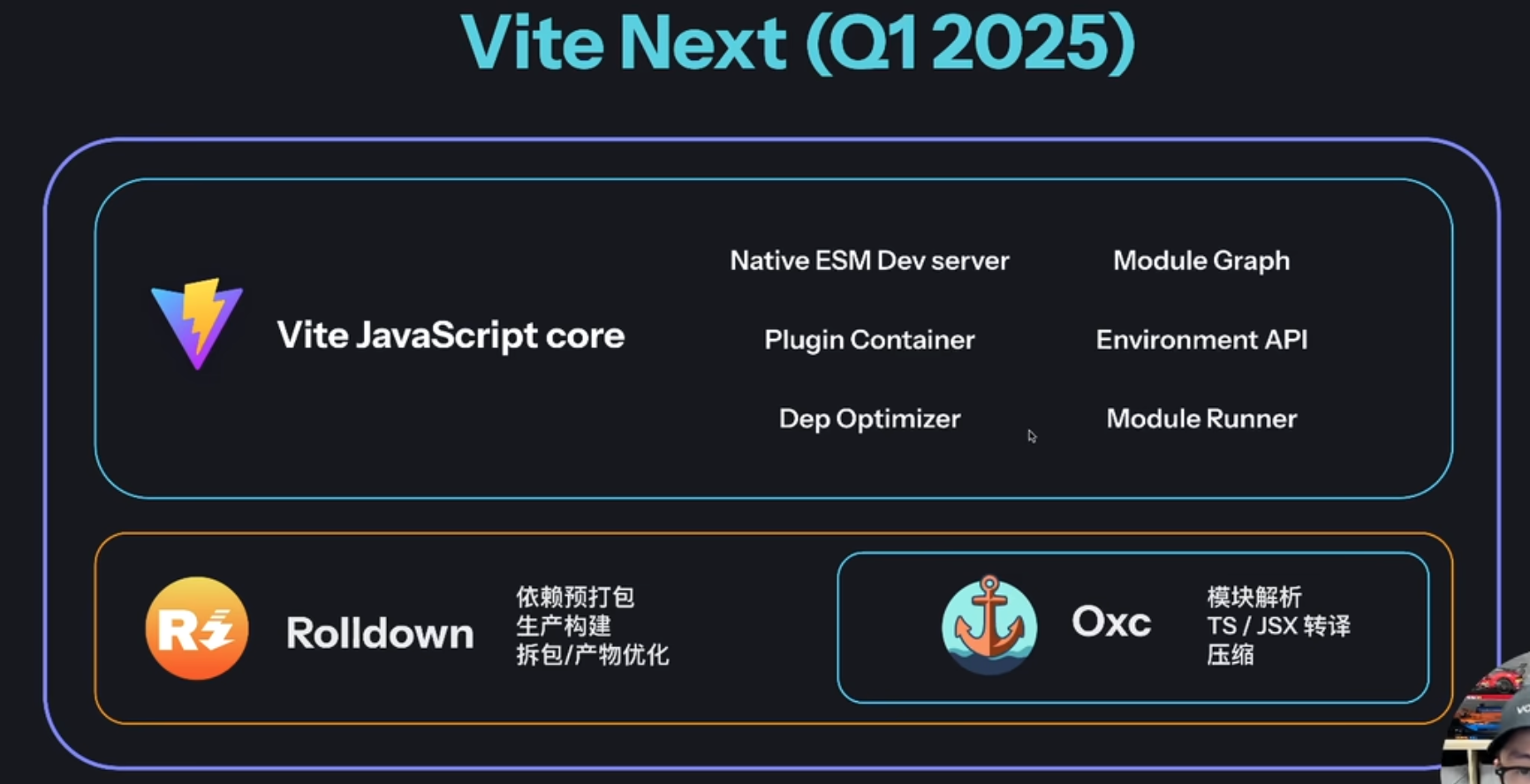
Vite Next
Looking forward to it.
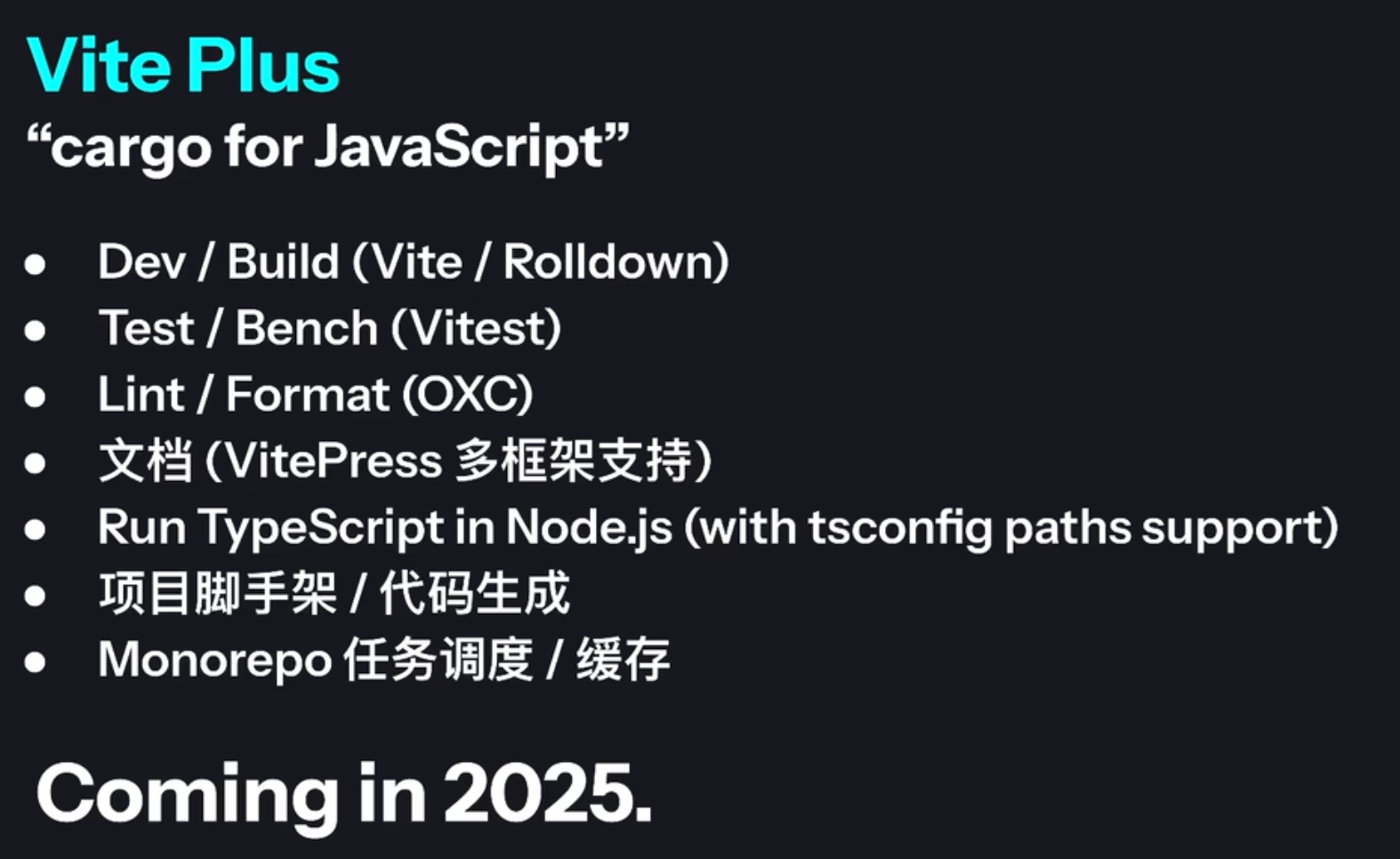
What they plan to deliver:
Resources
- All slides from the conference: https://github.com/d2forum/19th
- Video: https://www.bilibili.com/video/BV1WERGYDEix